
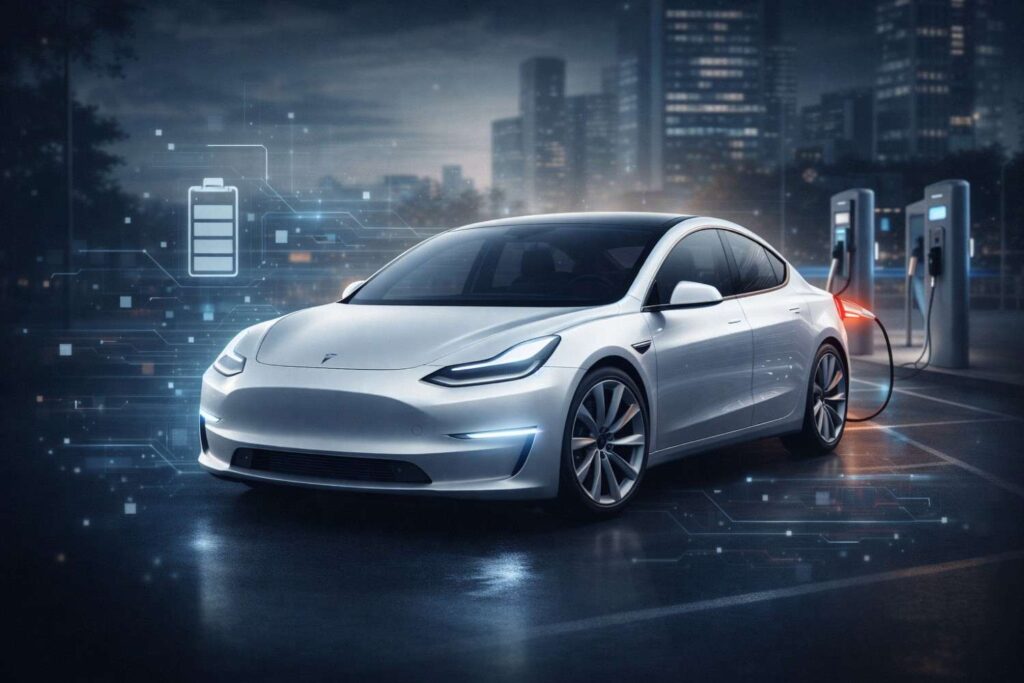
Tesla affordable EV plans for 2026 are no longer just speculation—they represent a strategic pivot that could redefine mass-market electric mobility. After dominating the premium and mid-range EV segments, Tesla is now focusing on a lower-cost electric vehicle aimed at unlocking the next wave of adoption.
This move comes at a time when EV demand is strong, but price sensitivity remains the biggest barrier. The Tesla affordable EV is designed to address that gap, potentially making electric vehicles accessible to millions of new buyers worldwide.
What Happened: Tesla Confirmed a Shift Toward an Affordable EV Platform
The momentum behind the Tesla affordable EV accelerated after Tesla leadership reiterated plans to develop a next-generation platform optimized for cost efficiency. Rather than modifying existing models, Tesla is working on a clean-sheet architecture focused on simplified manufacturing.
This announcement signals that Tesla views affordability—not just performance—as the next growth lever. The goal is clear: expand volume without sacrificing margins.
(Source: https://www.tesla.com/blog)
Key Details: What’s New in Tesla’s Next-Generation Affordable EV
The Tesla affordable EV is expected to differ significantly from current models.
Key highlights include:
- New low-cost vehicle platform
- Simplified vehicle architecture
- Reduced manufacturing complexity
- High level of automation
- Focus on essential features over luxury
Tesla’s strategy emphasizes efficiency at scale rather than feature overload.
(Source: https://www.bloomberg.com/news/articles/tesla-next-generation-platform)
Expected Price: Where the Tesla Affordable EV Could Be Positioned
One of the most searched aspects of the Tesla affordable EV is pricing. Industry analysts expect the entry price to fall significantly below current Tesla models.
Most projections place the Tesla affordable EV price between $25,000 and $30,000, depending on region and incentives. This would position Tesla competitively against both EV startups and traditional automakers.
(Source: https://www.cnbc.com/tesla-affordable-ev-price)
Why It Matters: Affordability Is the EV Adoption Bottleneck
The Tesla affordable EV matters because price—not charging infrastructure or range anxiety—is now the primary barrier to EV adoption.
By lowering the entry cost, Tesla could:
- Accelerate EV penetration globally
- Pressure competitors on pricing
- Expand EV adoption in emerging markets
Affordability changes EVs from aspirational products into practical purchases.
(Source: https://www.iea.org/reports/global-ev-outlook)
Market Perspective: How the Affordable EV Could Reshape Competition
From a market perspective, the Tesla affordable EV has disruptive potential. Legacy automakers rely heavily on profit from internal combustion vehicles, while many EV startups struggle with margins.
Tesla’s ability to produce a low-cost EV at scale could trigger a price reset across the industry, forcing competitors to rethink cost structures and timelines.
(Source: https://www.statista.com/markets/electric-vehicles)
Impact on the EV Ecosystem: Supply Chains and Manufacturing
The Tesla affordable EV strategy is closely tied to manufacturing innovation. Tesla aims to reduce costs through:
- Fewer parts
- Faster assembly
- Localized production
This approach could influence how future EVs are designed and built industry-wide.
(Source: https://www.mckinsey.com/industries/automotive-and-assembly)
Expert View: What Analysts Are Saying About Tesla’s Affordable EV
Automotive analysts see the Tesla affordable EV as both ambitious and necessary. Experts argue that Tesla must expand volume to sustain long-term growth as competition intensifies.
Analysts also note that Tesla’s vertical integration gives it a structural advantage in executing a low-cost EV strategy.
(Source: https://www.gartner.com/en/insights/automotive)
Global Implications: Why This EV Isn’t Just for the US
The Tesla affordable EV is expected to target global markets, including Europe and Asia. Emerging markets, in particular, represent massive untapped demand if pricing aligns with local purchasing power.
A globally priced affordable EV could shift EV adoption curves worldwide.
(Source: https://www.oecd.org/transport/electric-vehicles)
What’s Next: Timeline and Production Expectations
While Tesla has not announced a fixed launch date, most industry watchers expect:
- Pilot production before mass rollout
- Gradual scaling rather than instant volume
- Regional manufacturing strategies
The Tesla affordable EV is likely to appear first in high-volume markets.
(Source: https://www.ft.com/companies/tesla)
Challenges: What Could Delay or Disrupt Tesla’s Affordable EV
Despite optimism, the Tesla affordable EV faces challenges:
- Battery cost volatility
- Supply chain disruptions
- Regulatory differences across regions
- Competitive pricing pressure
Execution—not vision—will determine success.
(Source: https://www.brookings.edu/energy/ev-supply-chain)
Conclusion: Why the Tesla Affordable EV Could Be a Turning Point
The Tesla affordable EV represents more than a new model—it represents a shift in strategy. By prioritizing affordability, Tesla is addressing the last major hurdle to mass EV adoption.
If executed successfully, this vehicle could redefine expectations for electric mobility, force industry-wide change, and accelerate the global transition away from internal combustion engines. In 2026, the most important Tesla may not be the fastest—but the most accessible.
FAQs
What is Tesla’s affordable EV?
It is a next-generation, low-cost electric vehicle designed for mass adoption.
What will be the Tesla affordable EV price?
Analysts estimate $25,000–$30,000 depending on market and incentives.
When will Tesla launch the affordable EV?
Expected around 2026, with phased rollout.
Why is Tesla focusing on affordability now?
Because price is the biggest barrier to widespread EV adoption.