
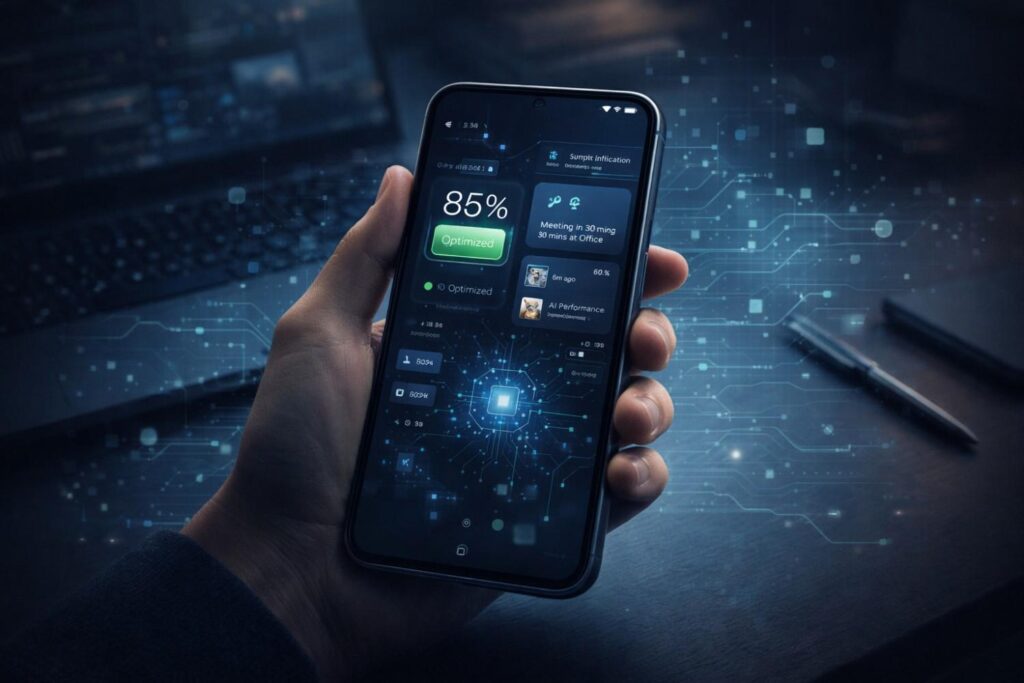
This AI smartphone review is based on 30 days of real-world usage—not launch hype, not spec comparisons, and not marketing promises. As AI smartphones flood the market in 2026, consumers are asking a more practical question: does artificial intelligence actually improve daily smartphone use, or is it just another buzzword?
After using the latest AI smartphone as a primary device for a full month—work, communication, photography, navigation, and everyday tasks—this review breaks down what genuinely changed, what felt unnecessary, and whether an AI phone is worth buying today.
What Happened: Smartphones Quietly Became AI-First Devices
The shift toward AI-first smartphones didn’t arrive with dramatic announcements. Instead, it crept into daily usage. AI now controls how phones manage battery, prioritize notifications, enhance photos, suggest replies, and optimize performance.
This AI smartphone review reflects that shift. Rather than opening an “AI app,” intelligence is embedded across the operating system, influencing behavior invisibly. This marks a structural change in how smartphones function.
(Source: https://www.mckinsey.com/featured-insights/artificial-intelligence)
Key Details: What the Latest AI Smartphone Actually Does (After 30 Days)
After 30 days, the most noticeable AI phone features were not flashy—but practical.
Key real-world AI functions include:
- Adaptive battery optimization based on usage patterns
- Smarter photo enhancement without manual editing
- Context-aware notification filtering
- Predictive text and voice input improvements
- Background performance tuning
This AI smartphone review confirms that usefulness comes from consistency, not novelty.
(Source: https://www.anandtech.com)
Why It Matters: AI Changes Habits, Not Just Features
The reason this AI smartphone review matters is simple: smartphones shape behavior. When AI reduces friction—fewer battery worries, fewer interruptions, faster tasks—it changes how often and how efficiently users engage with their device.
Unlike past upgrades, AI improvements compound over time. The phone feels more “personal” after weeks, not days.
(Source: https://www.forbes.com/sites/technology/)
AI Phone Features in the Real World: What Actually Helps
In real-world conditions, AI features that adapt automatically are the most valuable. Manual AI tools often go unused, but background intelligence improves experience passively.
This AI smartphone review found that users benefit most when AI works silently—adjusting brightness, learning schedules, prioritizing apps—without demanding attention.
(Source: https://www.gartner.com/en/articles/ai-user-experience)
Market Perspective: Why AI Smartphones Are Becoming the Default
From a market standpoint, AI smartphones are no longer premium experiments—they are becoming standard. Manufacturers now treat AI as a baseline capability rather than a differentiator.
This explains why almost all flagship phones in 2026 ship with dedicated AI hardware. AI smartphones are not optional anymore; they are the new normal.
(Source: https://www.counterpointresearch.com/global-smartphone-ai-trends/)
Performance and Battery: The Biggest AI Win After 30 Days
The most tangible improvement highlighted in this AI smartphone review is battery efficiency. AI-driven optimization extended daily usage without increasing battery size.
Performance also felt more consistent. Instead of peak speed, the phone delivered stable responsiveness even after weeks of heavy use.
(Source: https://www.dxomark.com/smartphone-battery-tests/)
Camera and Media: AI as a Silent Editor
Camera AI worked best when it stayed invisible. Photos required less manual correction, especially in low light and dynamic scenes.
This AI smartphone review confirms that AI photography is now less about dramatic filters and more about reliability—capturing usable shots without effort.
(Source: https://www.techradar.com/camera)
Expert View: What Analysts Say About AI Phones
Technology analysts generally agree that AI smartphones are entering a maturity phase. Experts emphasize that value comes from system-level integration rather than standalone AI apps.
Analysts caution buyers to evaluate AI phones based on daily usability, not marketing claims.
(Source: https://www.gartner.com/en/insights/consumer-technology)
What’s Next: How AI Smartphones Will Evolve
Looking ahead, AI smartphones are expected to become:
- More context-aware
- More privacy-focused
- Less cloud-dependent
- More personalized over time
Future AI phones will anticipate needs rather than respond to commands.
(Source: https://www.bloomberg.com/technology)
Challenges: Where AI Smartphones Still Fall Short
Despite progress, this AI smartphone review identified limitations:
- Some AI features feel redundant
- Learning curves exist for new users
- Transparency around data usage varies
- AI errors still occur in edge cases
AI is helpful, but not infallible. Trust builds gradually.
(Source: https://www.ft.com/technology)
Conclusion: Is the Latest AI Smartphone Worth Buying After 30 Days?
After 30 days, the answer from this AI smartphone review is nuanced.
If you upgrade frequently for flashy features, AI alone may not justify the switch. But if you value smoother performance, better battery life, smarter photos, and reduced friction, an AI smartphone is absolutely worth buying in 2026.
The biggest benefit of AI is not what you notice—it’s what you stop worrying about. That quiet improvement is what makes AI smartphones genuinely valuable.
FAQs
Is an AI smartphone better than a regular smartphone?
Yes, primarily in battery efficiency, performance stability, and personalization.
Do AI features work offline?
Many core AI functions now operate on-device without internet access.
Is an AI phone worth buying in 2026?
For long-term daily use, yes—especially for productivity and camera users.
Will AI phones improve over time?
Yes. AI models adapt and improve with continued usage.
Also read this related articles :-
Samsung Galaxy vs iPhone 2026: What Changed, What Matters, and Which Smartphone Is Actually Better.